
Yoga Retreat in the Maldives: What to Actually Expect
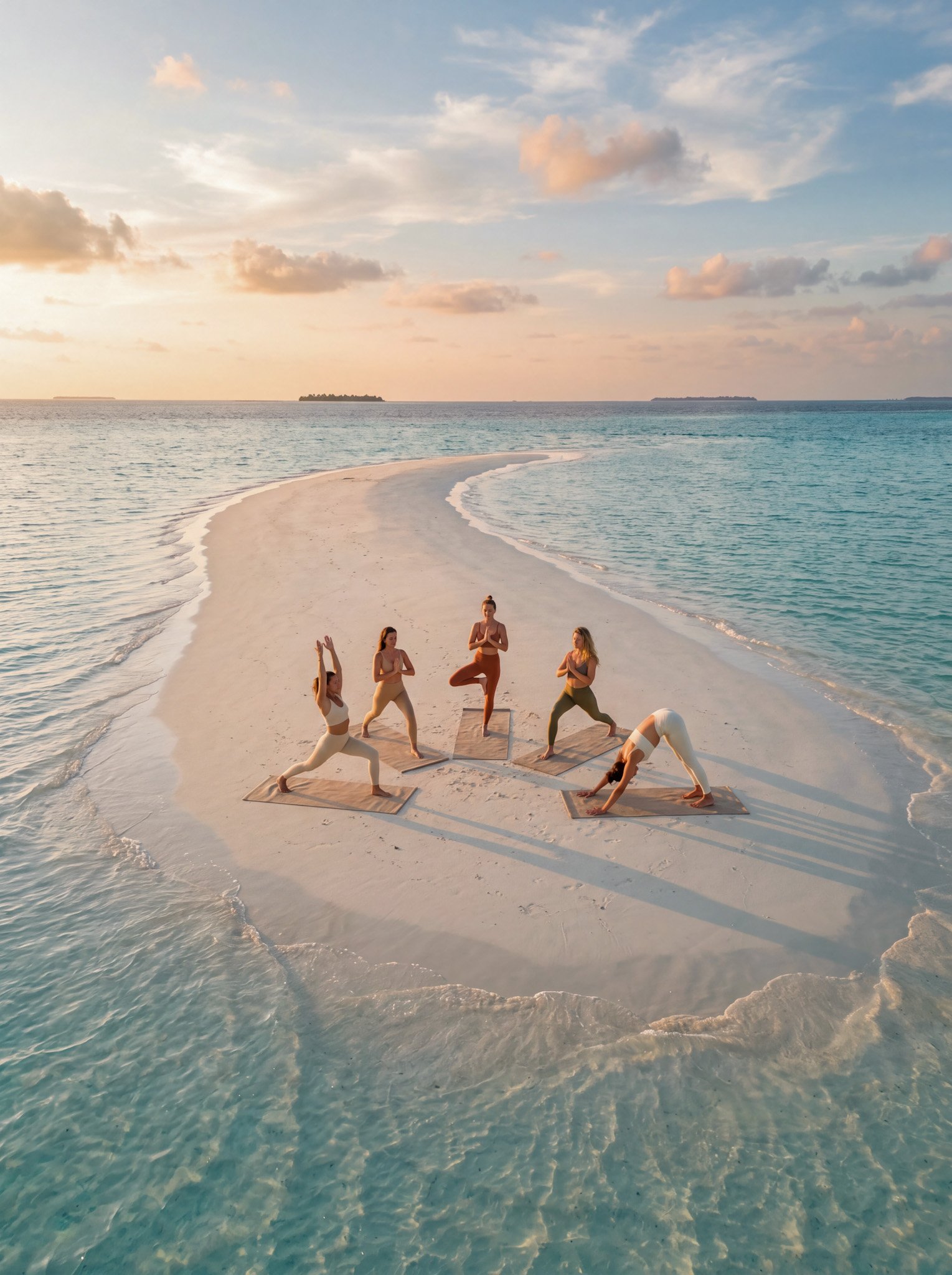
Picture the version of a holiday where nobody asks what you do for work.
Where the biggest decision of the day is whether to do your sun salutations facing the lagoon or the open ocean. Where you eat when you're hungry, not when a bell tells you to, and the loudest sound for a week is water against the hull of a dhoni boat.
That's not a brochure fantasy. It's a fairly accurate description of a week spent doing yoga in the Maldives — and it's very different from what most people imagine when they hear "Maldives holiday," which usually conjures honeymoon suites and infinity pools rather than anything resembling personal transformation. Here's what it's actually like, and how to tell a retreat worth your money from one that's just yoga mats on a nice beach.

What a Yoga Retreat in the Maldives Actually Looks Like
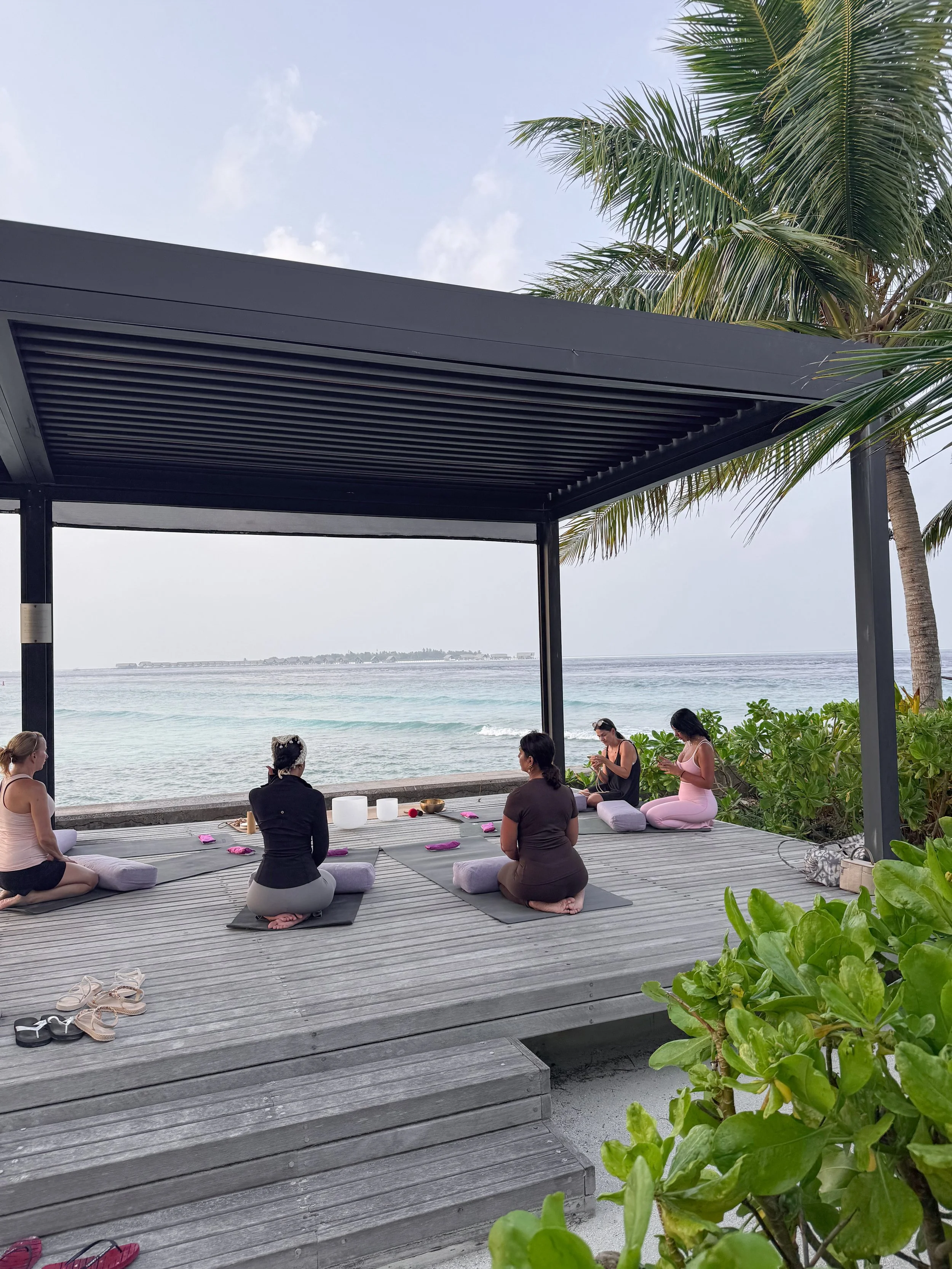
Strip away the marketing and a Maldives yoga retreat is usually built around a small overwater or beachfront property on a single atoll — not a resort island with three thousand other guests, but somewhere small enough that you learn everyone's name by day two. Mornings start early, before the heat sets in: a sunrise practice on a deck over the water, often followed by breakfast that leans into local produce — fresh fruit, coconut, fish, none of the buffet sprawl you'd get at a standard resort.
Afternoons are where retreats vary the most. Some pack in reef snorkelling, paddleboarding, or a sunset dolphin cruise. Others deliberately leave the afternoon empty, on the theory that unstructured time is the whole point — that most of us are so scheduled at home, a few days with nothing to optimise is its own kind of medicine. The best retreats are honest with you up front about which philosophy they follow, because it changes the entire feel of the week.
What Good Looks Like
A retreat worth flying for gets a few things right that are easy to miss when you're scrolling through Instagram photos of infinity pools.
Small group size. Anything over about fourteen guests starts to feel like a class, not a retreat — you lose the personal attention that makes the yoga itself worthwhile, and the sense of quiet the Maldives is supposed to deliver.
A teacher who actually teaches, not just leads. There's a real difference between someone running you through a sequence and someone who notices your alignment is off in downward dog and actually says something about it. Ask who's leading before you book, and look them up.
A genuine rhythm, not a packed itinerary. If the day sheet reads like a cruise ship schedule — back-to-back activities from 6am to 9pm — it's not a wellness retreat, it's a holiday with a yoga mat attached. You should finish each day tired in a good way, not depleted.
Food that's actually part of the experience. Nourishing, largely plant-forward, but not punishing. If a retreat's answer to "wellness" is restriction, that's worth noticing before you pay a deposit.
What to Watch Out For
The Maldives is made up of over a thousand islands and roughly two hundred resort atolls, and "wellness" gets attached to almost all of their marketing now — it doesn't mean much on its own. A few things are worth checking before you commit.
Transfers matter more here than almost anywhere else. Some atolls are a twenty-minute speedboat ride from Malé airport; others require a seaplane transfer that eats half a travel day and adds real cost. Ask exactly how you get from the airport to the retreat, and factor that into both your budget and your energy for day one.
Also check whether "yoga retreat" actually means daily practice led by a dedicated instructor, or whether it's one class squeezed in around a standard resort stay with a wellness label slapped on the package. The second version is far more common than people expect, and far less likely to leave you feeling like anything shifted.
A Sample Week
Most well-run Maldives retreats follow a loose version of this rhythm across five to seven nights:
Day 1: Arrival, settling in, a gentle evening practice to shake off the travel.
Days 2–3: Sunrise yoga, a slower midday, snorkelling or reef time in the afternoon, restorative practice or meditation as the sun goes down.
Day 4: A full rest day — genuinely unstructured, or an optional excursion for anyone who wants one.
Days 5–6: Back into rhythm, often with a deeper focus session — pranayama, yin, or a longer meditation sit — as the group settles in.
Final day: A closing practice, then departure, usually with everyone exchanging numbers they'll actually use.
What It Actually Costs
A Maldives yoga retreat generally runs higher than an equivalent week in Bali or Sri Lanka, purely because of geography — everything on a private atoll, from food to fresh water, arrives by boat or plane. Expect a wider range than other destinations, roughly $2,500 to $7,000+ depending on the property, room category, and whether flights and transfers are included. The honest advice: don't just compare the headline price. Compare what's actually included — transfers, all meals, excursions — because the "cheaper" retreat with a $400 speedboat transfer and no meals included often ends up costing more.
Ready for Your Own Maldives Reset
If the idea of sunrise yoga over the water, real rest, and a small group of women who get it sounds like exactly what you need right now — that's precisely what we built our Maldives retreat around. No crowded resort, no packed itinerary, just genuine practice, real food, and enough unstructured time to actually feel the difference by the time you fly home.
Take a look at our Maldives retreat and see if it's your kind of reset.