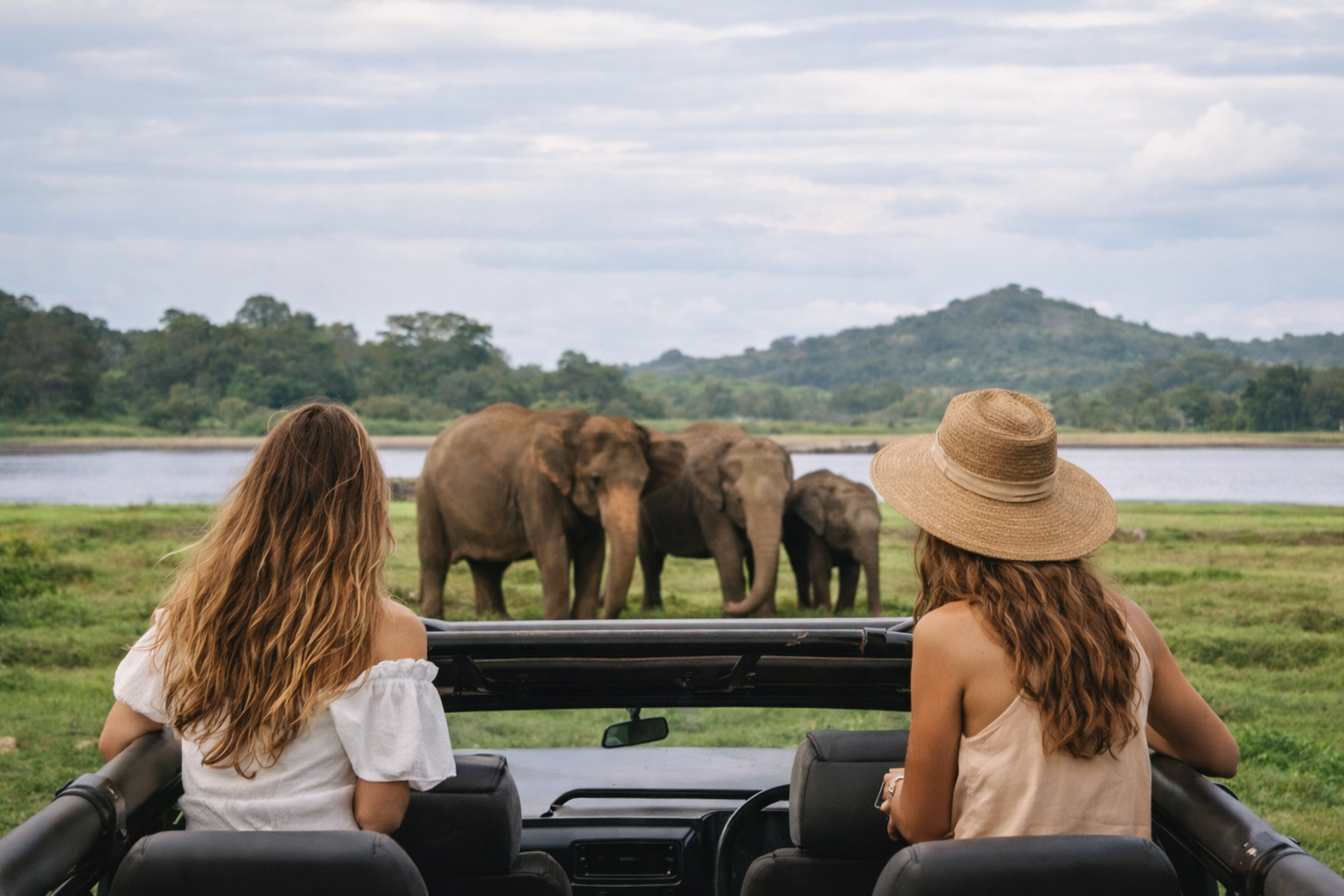
Wellness Retreat Sri Lanka: What to Expect
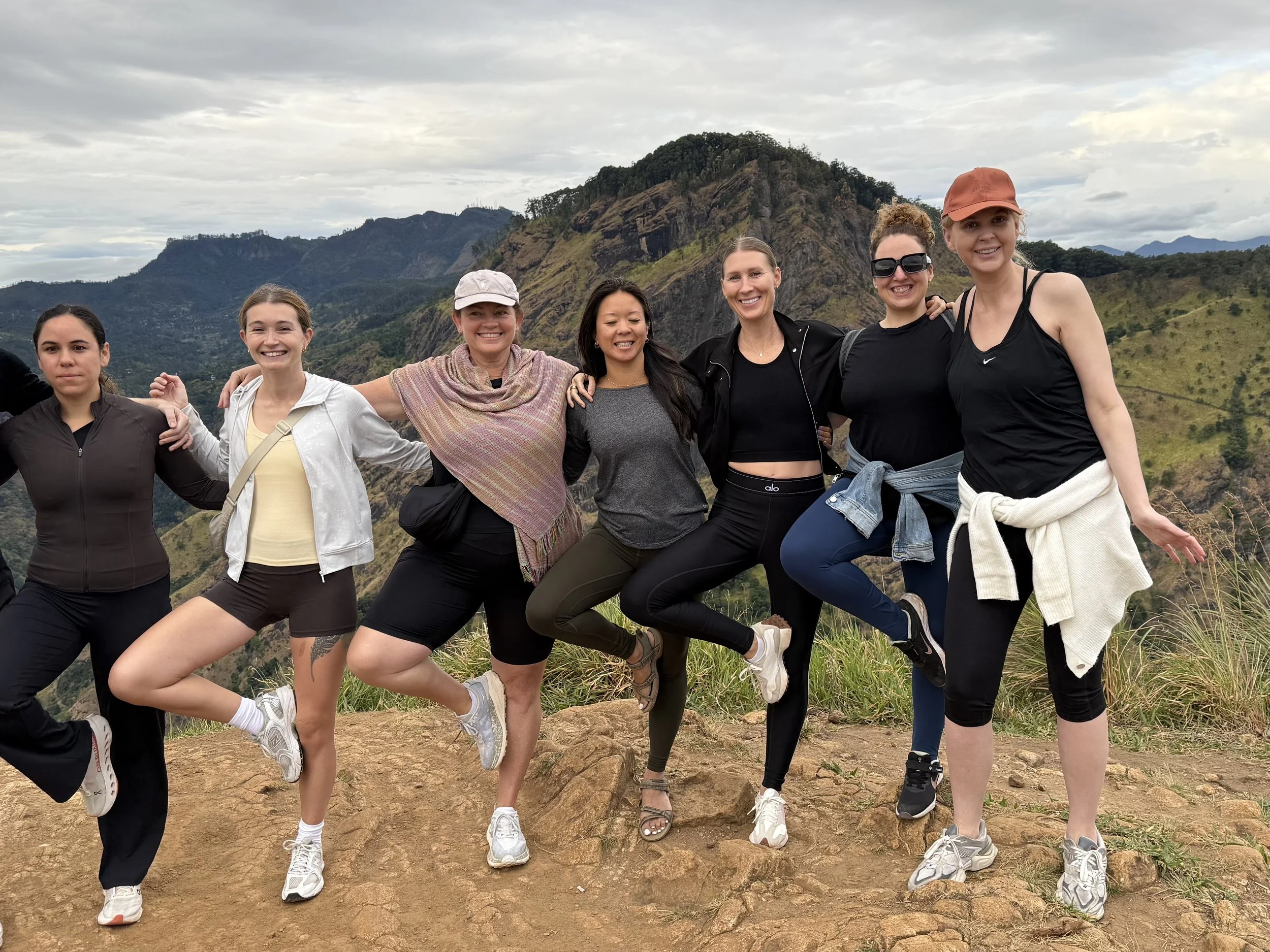
The first time I took a group to Sri Lanka, we practiced yoga on an open terrace with nothing in front of us but ocean. By day three, I stopped needing to plan the sessions in advance — I could read exactly what the group needed.
That's the thing this island does. It doesn't just give you a beautiful place to do yoga. It changes the pace you're moving at before you've even noticed it happening.
Why a wellness retreat in Sri Lanka feels different
Not every retreat destination suits every kind of traveller. Some places are brilliant for nightlife, others for complete seclusion. Sri Lanka sits in a very particular sweet spot — exotic without being inaccessible, luxurious without losing its soul, deeply sensory without becoming overwhelming.
The landscape does a lot of the work. Palm-fringed beaches, lush jungle, tea country, ancient temples and warm ocean air create an atmosphere that naturally slows the nervous system. But what makes Sri Lanka especially compelling for a retreat is contrast — a single week can hold sunrise movement, genuine Ayurvedic treatment, meaningful cultural experience and proper stillness, without ever feeling like a checklist.
The island has been practising wellness for over 3,000 years through Ayurveda — a system of medicine rooted in the idea that health is a balance between mind, body and environment, not a spa menu you add to a holiday. The better retreats draw on that tradition properly. The weaker ones borrow the aesthetic and stop there.
The two kinds of wellness retreat you will find here
Search wellness retreat Sri Lanka and you will get two very different categories back, often dressed up to look the same.
The first is a resort with a wellness menu bolted on — beautiful rooms, an extensive spa list, maybe a yoga class at 7am if you can drag yourself there. It's a nice holiday. It isn't, in any real sense, a retreat — you're still making every decision yourself, surrounded by other guests who may or may not be there for the same reason you are.
The second is smaller, deliberately so. A group capped at a number where everyone's face is familiar by day two. A daily rhythm — movement, food, rest, reflection — that's been designed rather than assembled. A facilitator who is present for the whole thing, not flown in for one session and gone by lunch.
Neither is wrong. But they're different trips, and it's worth knowing which one you're actually booking before you land, not after.
What good actually looks like
A retreat worth your time and your flight tends to have a few things in common, regardless of which operator is running it:
A small group. Somewhere between eight and sixteen people. You want to be seen, not managed, and to actually know the other women you're travelling with by day two or three.
A facilitator who stays the whole time. Not a rotating cast of contract instructors flown in for a single session. Continuity is what lets someone actually adjust to your body and your week, rather than teaching to an imaginary average guest.
Real structure, with real rest built in. A good day has shape — morning movement, breakfast, time built in to do absolutely nothing, an evening practice that isn't just optional yoga tacked onto dinner. The best retreats protect the unstructured hours as deliberately as they plan the scheduled ones, because that's often where the actual settling happens.
Food that's part of the programme, not fuel between sessions. Sri Lankan cuisine is genuinely one of the most anti-inflammatory, plant-forward food cultures in the world when someone knows how to cook it properly — rice, dhal, coconut, tropical fruit, curries built around what your body needs that day rather than a buffet that could be anywhere.
Cultural depth built in, not bolted on as an excursion. A morning at a tea plantation, a visit to a spice garden where someone actually explains what you're looking at, time in a UNESCO-listed region — these aren't add-ons on the strongest itineraries. They're part of what the week is actually for.
What to watch out for
The wellness retreat market here has grown fast, and wellness carries no legal weight — it gets attached to things that are really just holidays with a nicer font.
Be wary of descriptions heavy on adjectives and light on specifics. Transformative, deeply healing, journey — these words mean nothing without the details behind them. A good retreat can tell you, plainly, what a Tuesday actually looks like. If a website can only speak in feelings, that's usually a gap where the programme should be.
Watch for group sizes that aren't mentioned anywhere, or that creep upward without warning — a retreat sold as intimate that turns out to have thirty guests is a different holiday altogether. Watch for pricing that looks reasonable until you notice flights, transfers and half the excursions are extras. And be cautious of itineraries that promise everything — yoga, pilates, surfing, cooking classes, a safari, a spa day, all in seven days. That's not a retreat, that's a checklist, and it usually means none of it is done particularly well.
What a week can actually look like
Here's a real shape, drawn from an 8-day small-group journey through the island:
Days 1–2 — Sigiriya & Dambulla. Arrive into Colombo and transfer to the cultural heartland. Morning yoga at the base of Sigiriya Rock Fortress before the crowds arrive, an afternoon climb, and a visit to the Dambulla Cave Temple, where the light inside is extraordinary. Evening breathwork to close the day.
Days 3–4 — Kandy. The sacred city in the highlands. A visit to the Temple of the Tooth Relic, morning pilates in the hills above the city, then the highland train toward Ella — one of the most beautiful train journeys in the world.
Days 5–6 — Ella. Waking up above the clouds. Morning yoga in the mist, the Nine Arch Bridge, tea plantations and jungle trails, evening sound healing as the light fades over the hills.
Days 7–8 — Galle. Transfer to the southern coast and the UNESCO-listed Galle Fort. Slow mornings, ocean swimming, colonial streets, and a closing practice before everyone heads home.
That movement through the island is deliberate — Sri Lanka rewards it. Each region feels genuinely different, and waking up somewhere new partway through a retreat tends to keep the nervous system curious rather than just comfortable.
Ayurveda, done properly
A genuine Ayurvedic element starts with a consultation, not a treatment menu. Before anything happens, a trained practitioner — we always work with the Ayurvedic doctor Aya at AyurVie spa — takes the time to understand your current state and what your body actually needs that week, rather than picking a massage off a laminated list.
The treatments that follow are sequenced, not random: an oil massage one day to draw things out, a steam or herbal bath the next to support it, a lighter day after that to let your body absorb what's happened. That pacing is the difference between a spa day and something closer to a genuine reset.
Yoga, Pilates and getting the intensity right
One of the most common questions we hear is whether a retreat will be too intense or too passive. The honest answer: most women arrive needing less intensity than they think. The best thing a good retreat can do in the first 48 hours is slow everything right down.
A balanced week challenges you just enough to feel present in your body again, while leaving real room for recovery — dynamic movement in the morning, restorative practice later in the day, treatments or free time in between. If you're arriving depleted, more intensity is rarely the answer. A thoughtful retreat meets you where you are rather than where the itinerary assumes you'll be.
Cost and practical information
A well-run 8-day small-group retreat — accommodation, daily movement, most meals, internal transfers and genuine cultural immersion included — typically starts from around US$2,599 per person, with groups capped at 12 guests. Flights are separate; expect journey times of roughly 9–14 hours from Australia via Singapore, Kuala Lumpur or Dubai, plus a further 2–4 hours by road from Colombo depending on where you're headed.
Weather varies by coast, which matters more than people expect. The south and west coasts (where most retreats, including ours, are based) are driest from November through April. If you can travel in the shoulder months — May, June or October — the light is extraordinary and the crowds are thinner, which is honestly when I'd choose to go myself.
Is Sri Lanka right for your next retreat?
If you want pure isolation, there are quieter islands. If you want a retreat that feels cocooning and familiar, there are simpler destinations. But if you want warmth, beauty, spiritual depth and the chance to pair meaningful practice with genuine travel, Sri Lanka is exceptionally hard to beat.
A wellness retreat here isn't about escaping your life forever. It's about stepping out of its noise long enough to hear yourself again — with the right group, the right pacing, and a level of care that turns a beautiful week away into something that actually stays with you once you're home.
Come with us
Our 2026 Sri Lanka Yoga & Pilates Retreat has limited spots remaining — see the full itinerary and dates here. If you're planning further ahead, our 2027 Sri Lanka Pilates Retreat is now open for early registration — find out more here.
Many guests pair Sri Lanka with a second week by the ocean — our complete guide to the Maldives Pilates Retreat walks through what that week looks like, or you can see the combined Sri Lanka & Maldives journey if you want both in one trip.
If you want to talk through whether Sri Lanka is the right fit for where you are right now, I'm happy to chat — Courtney, Holistic Escapes.
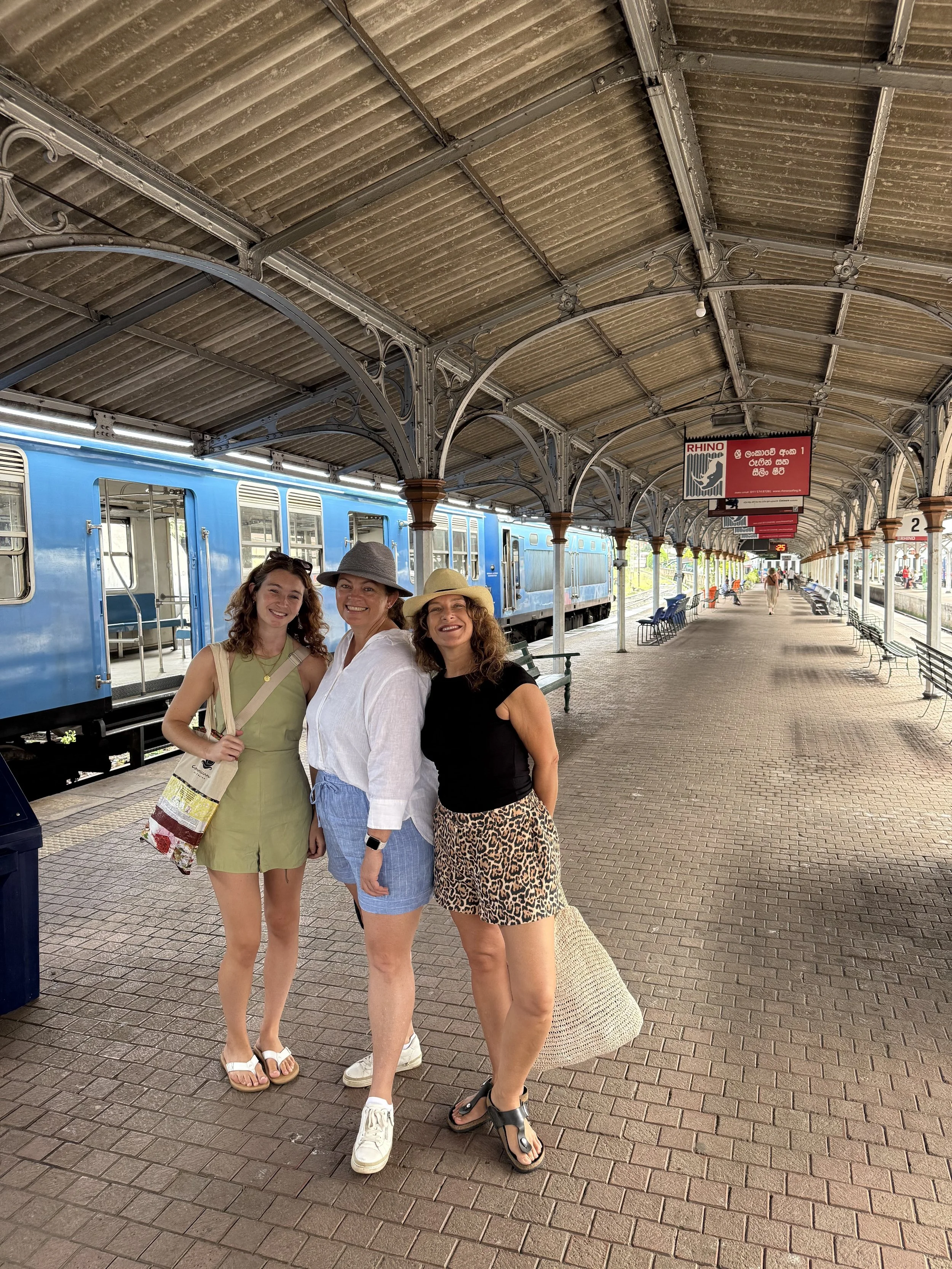
Our beautiful guests before we hopped on the train from Kandy to Ella together at our 2025 retreat